

Description
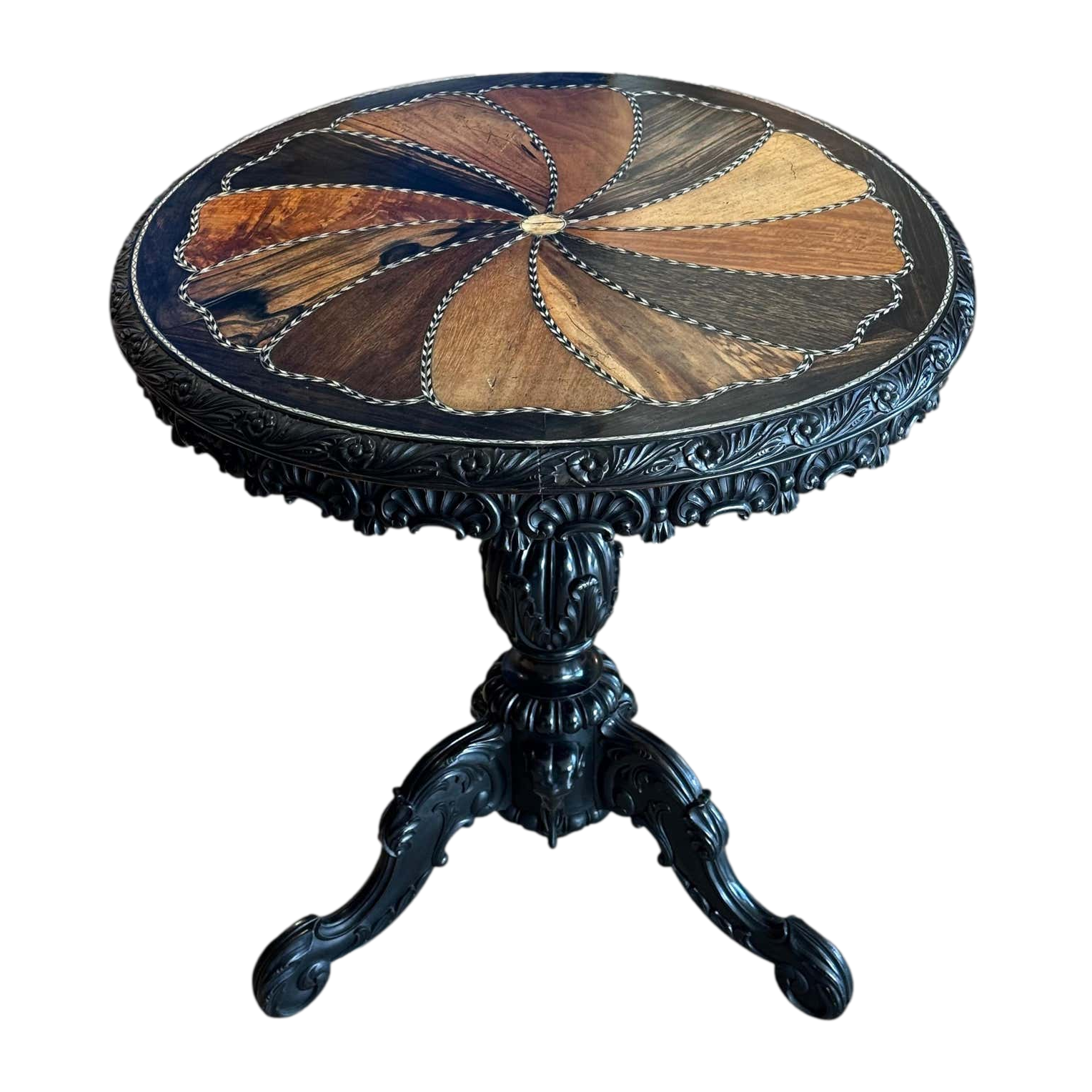
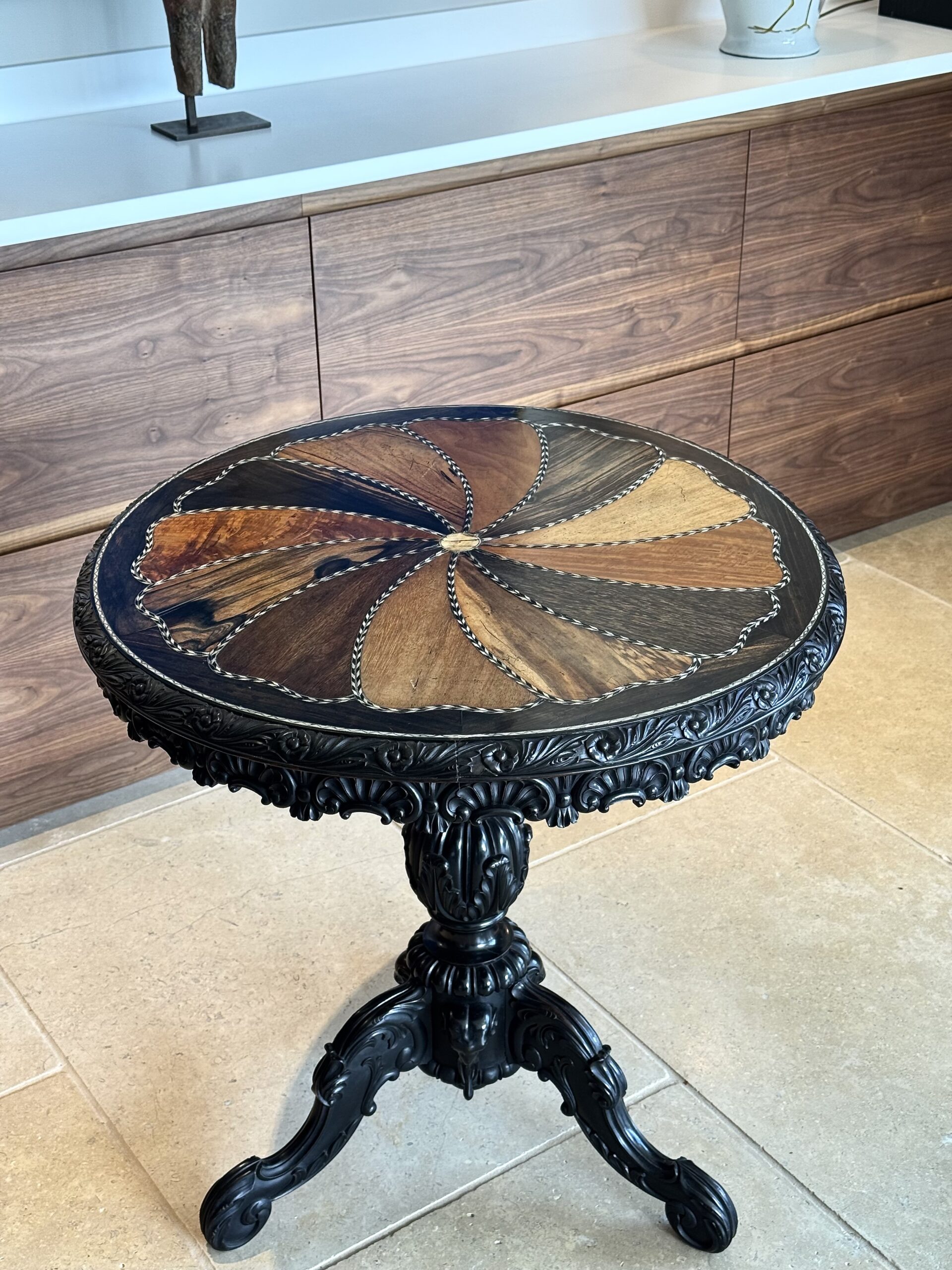
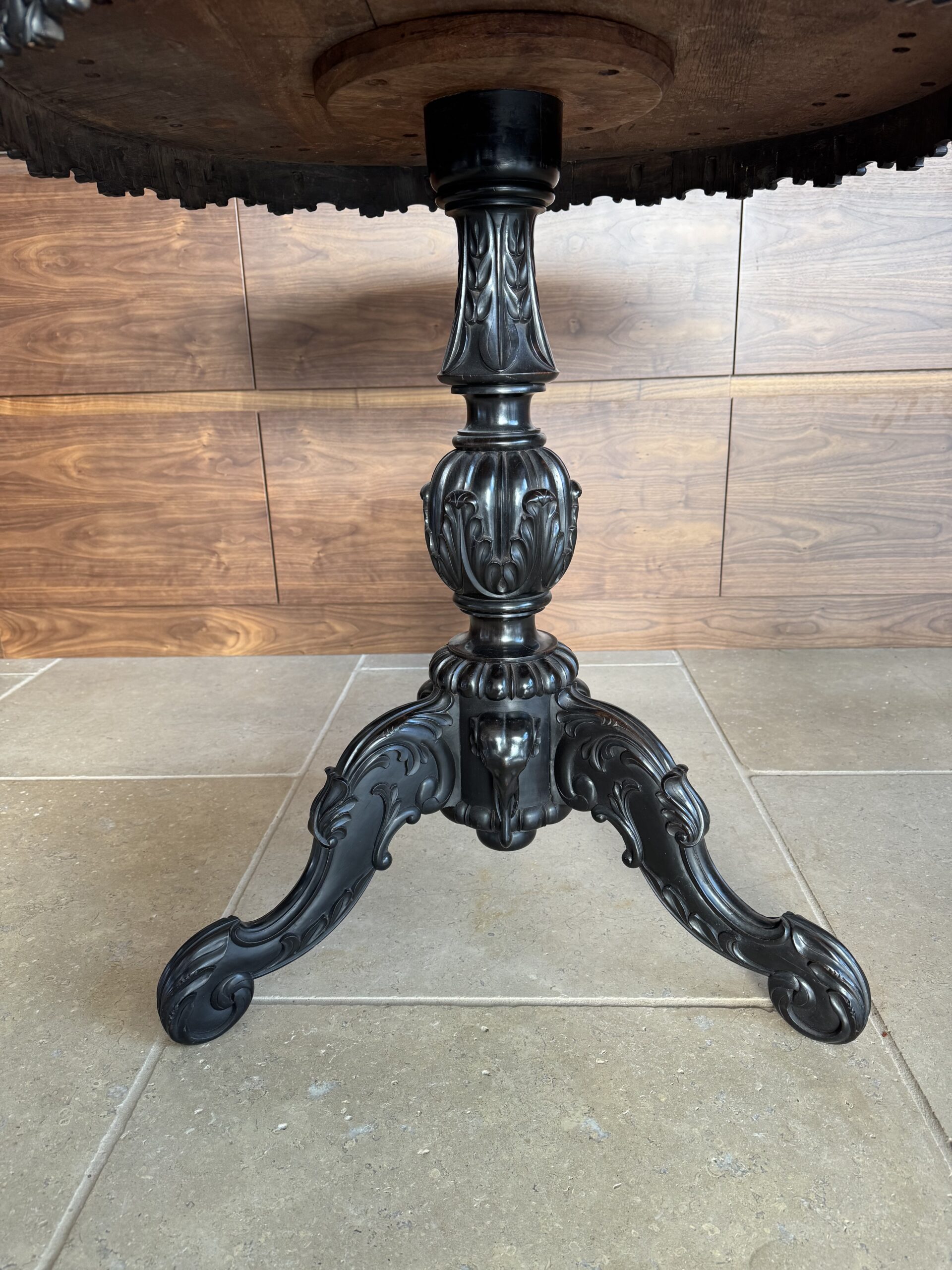
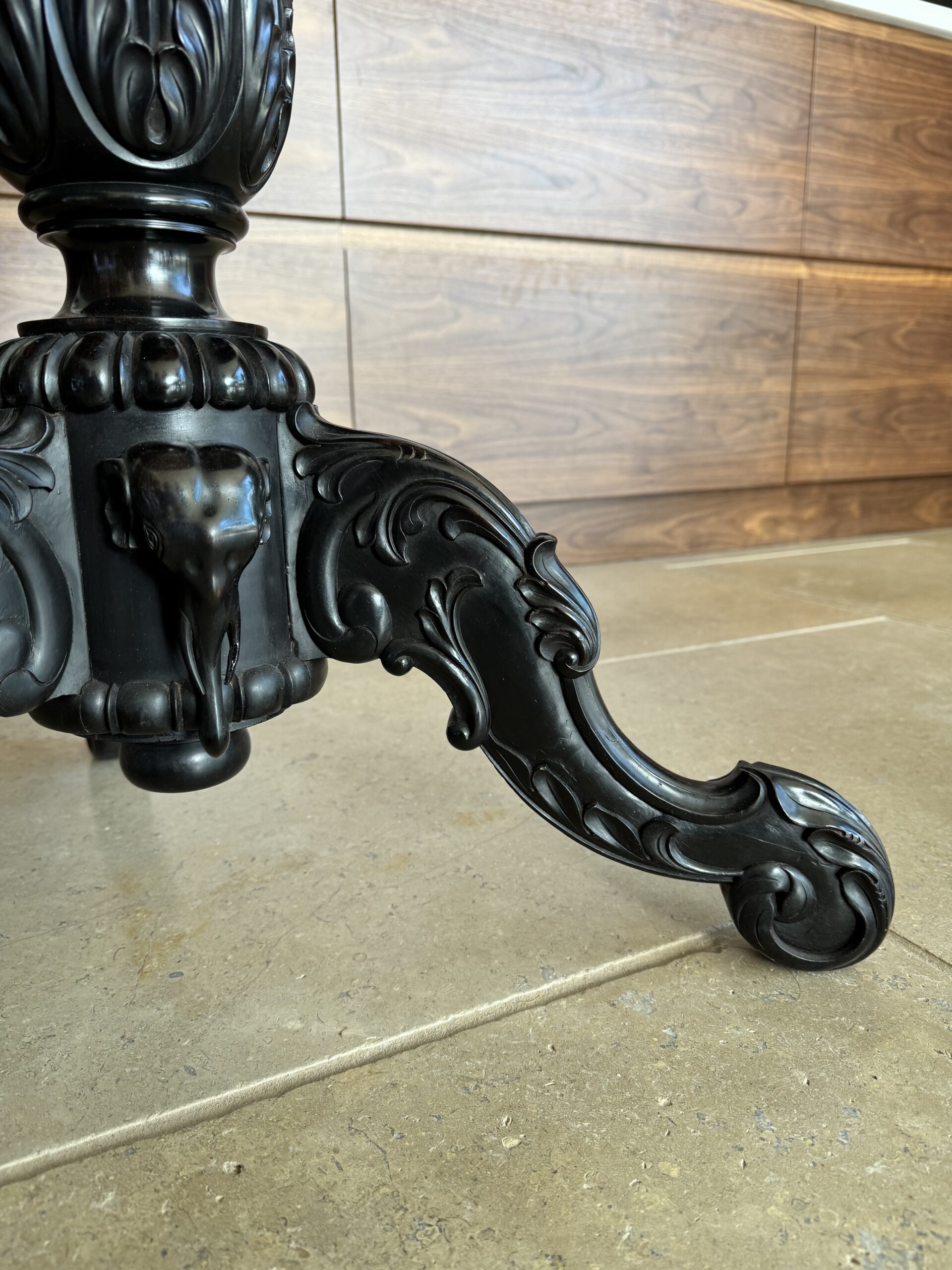
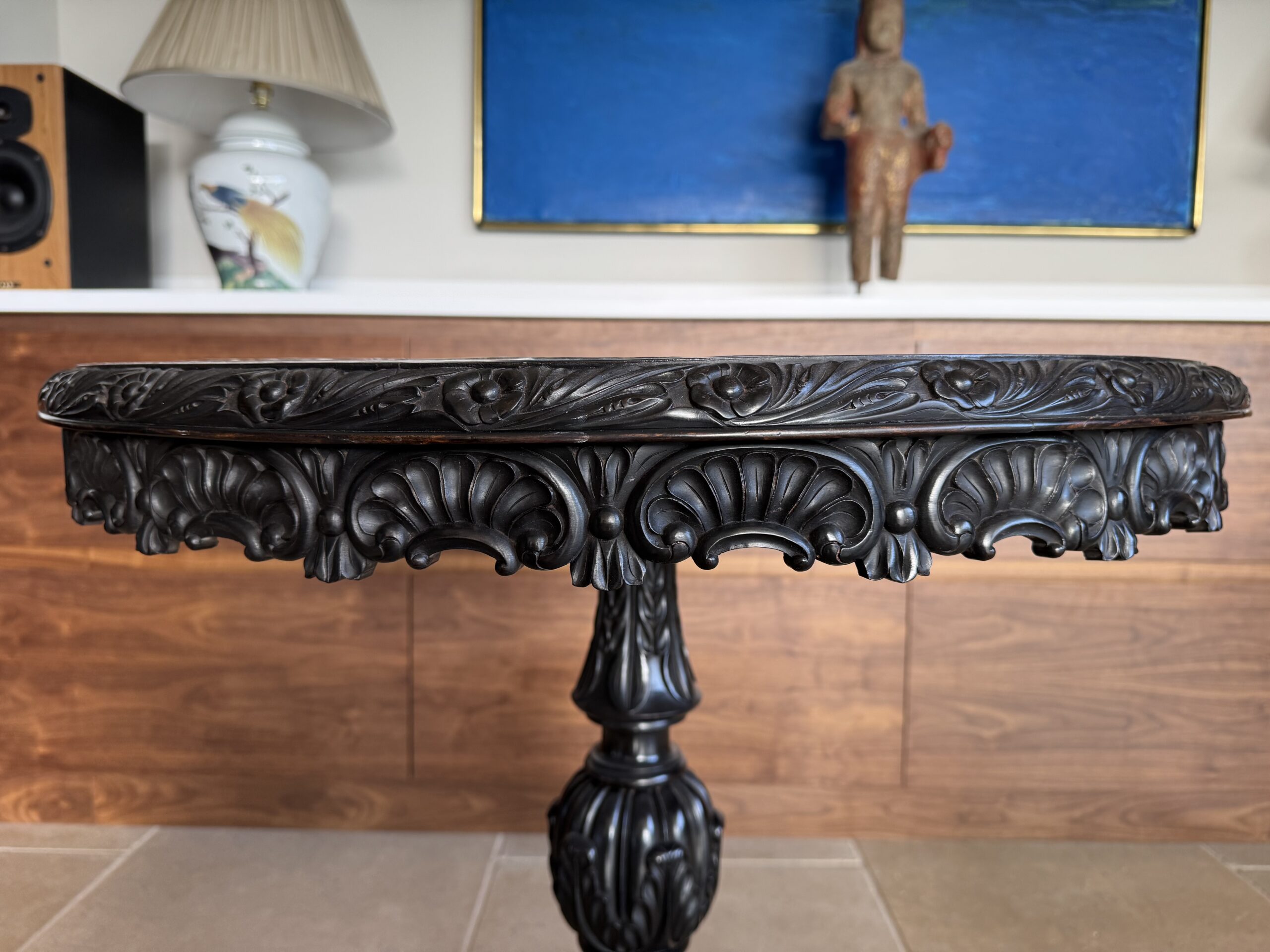
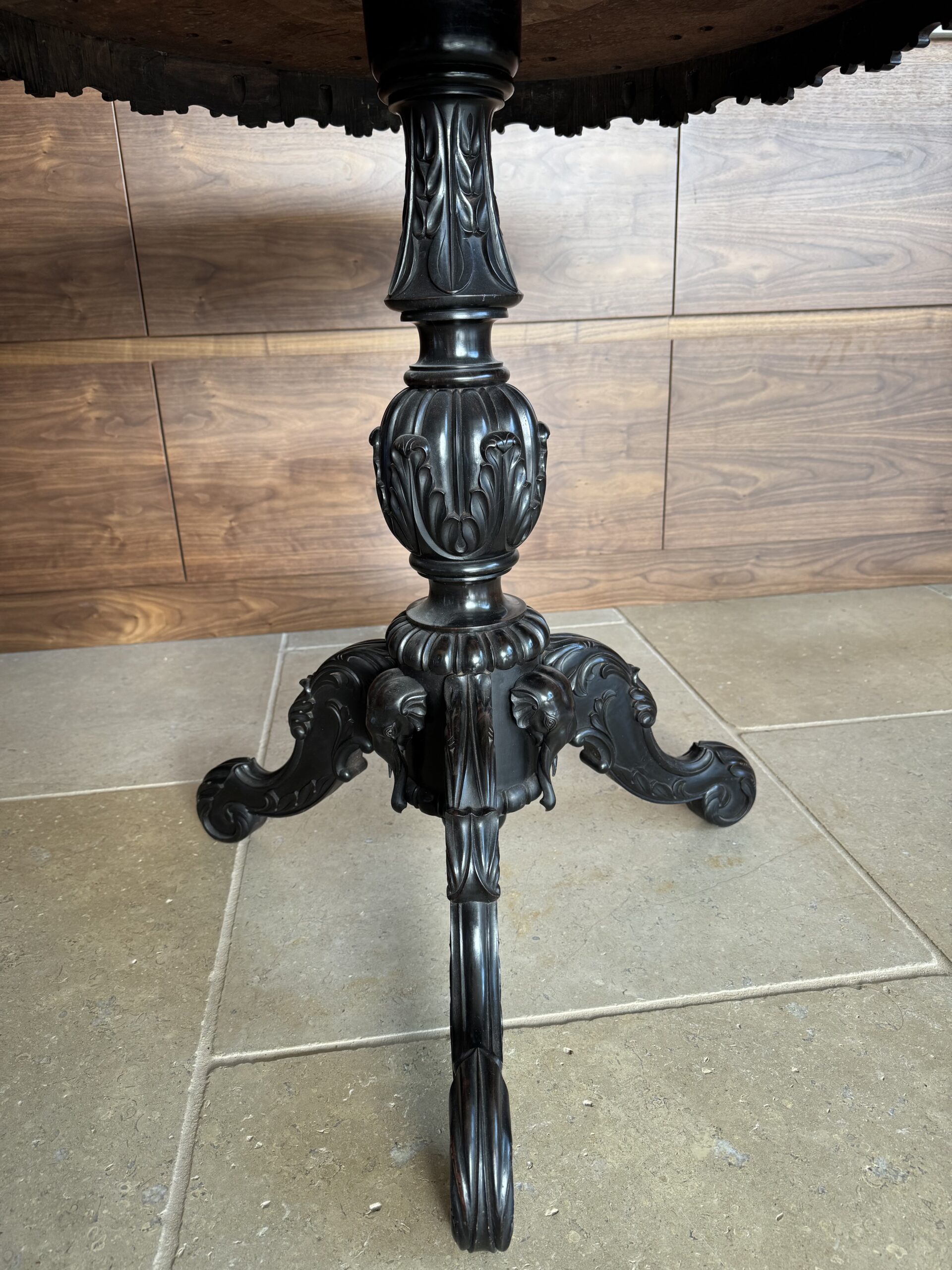
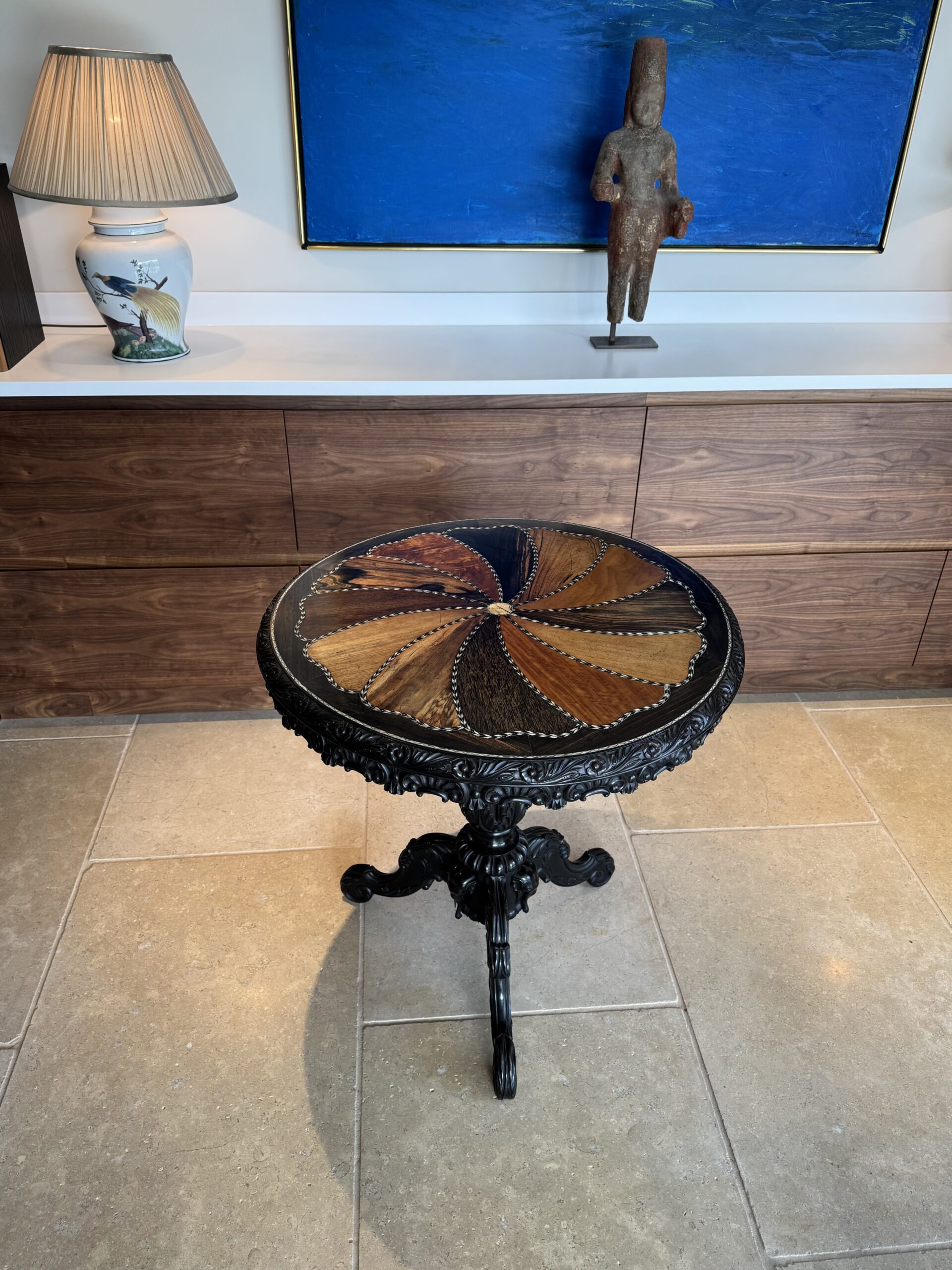
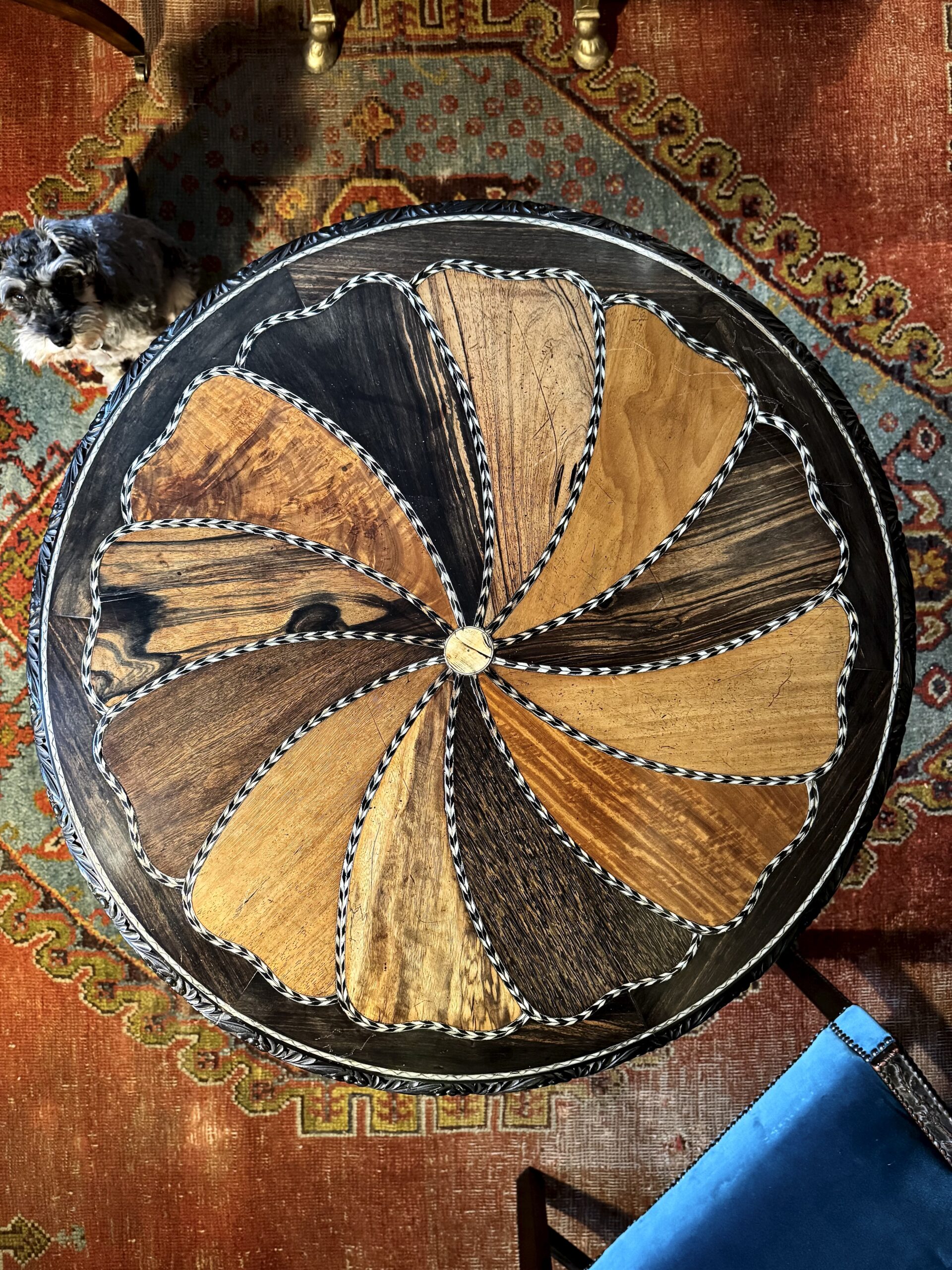
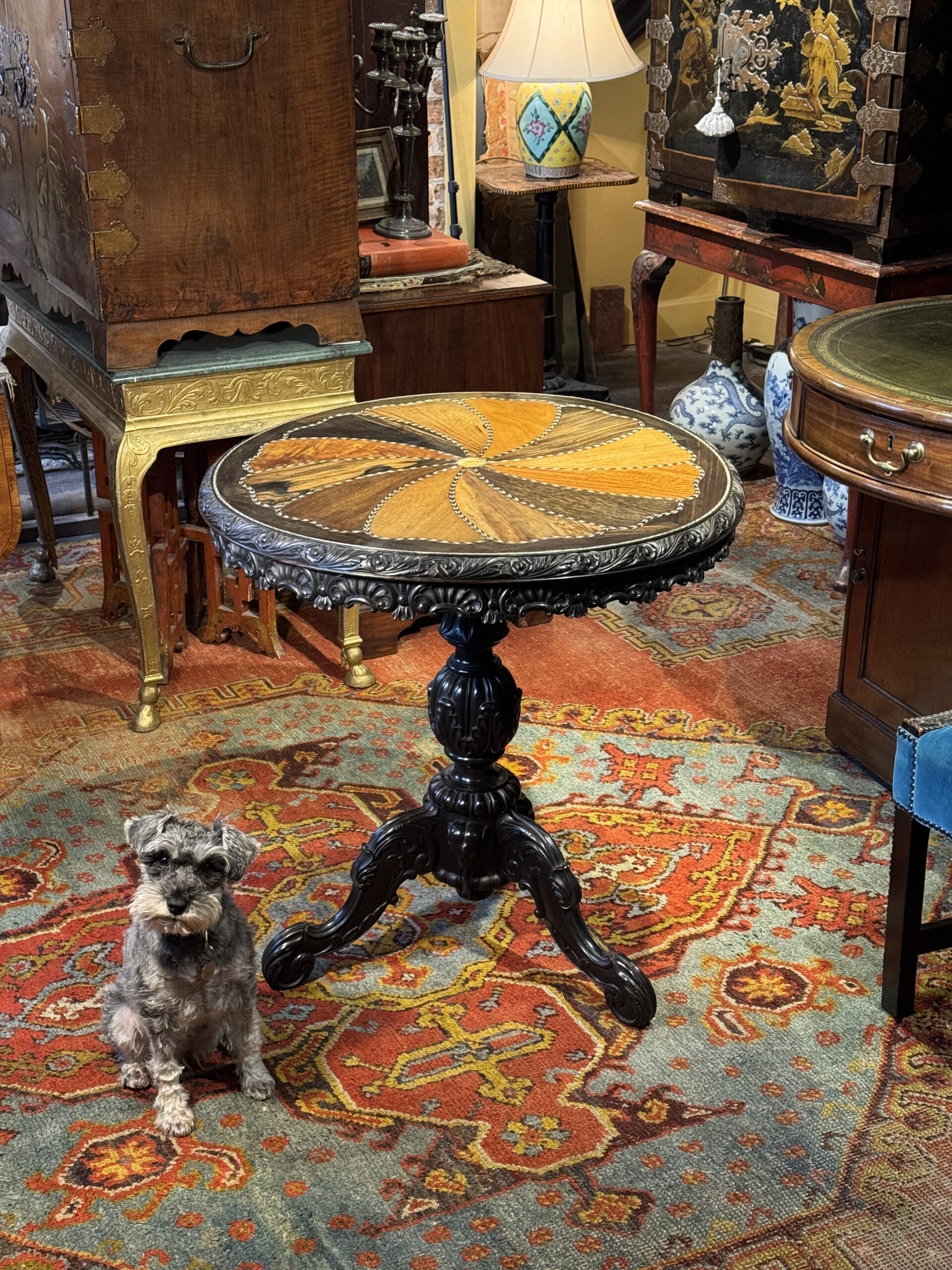
A fine and quite rare Ceylonese early-19th century colonial ebony and specimen wood occasional table raised on a well-carved solid ebony support displaying elephants and scrolled foliate decoration. Circa 1840.
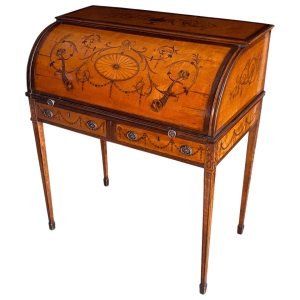
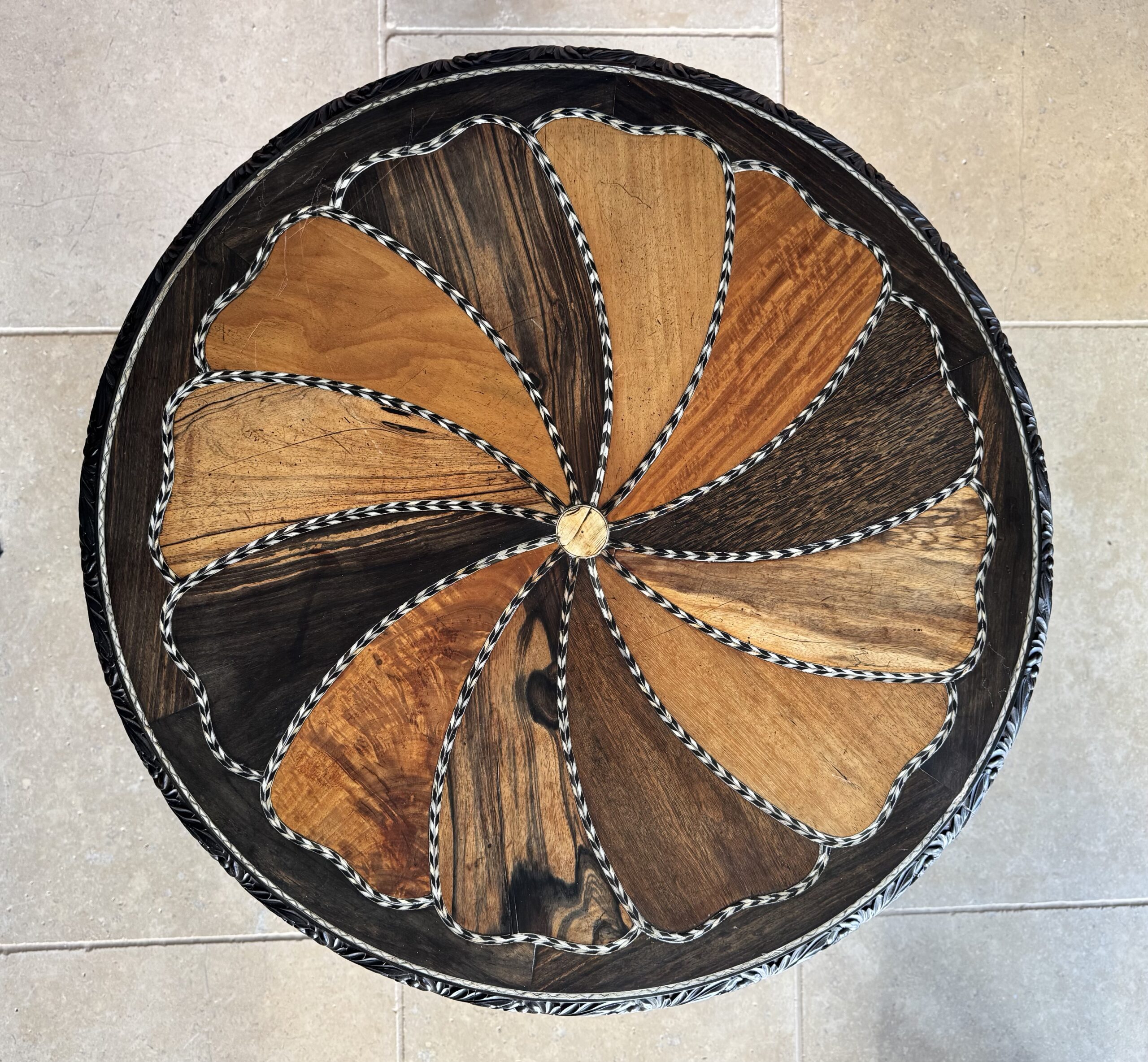
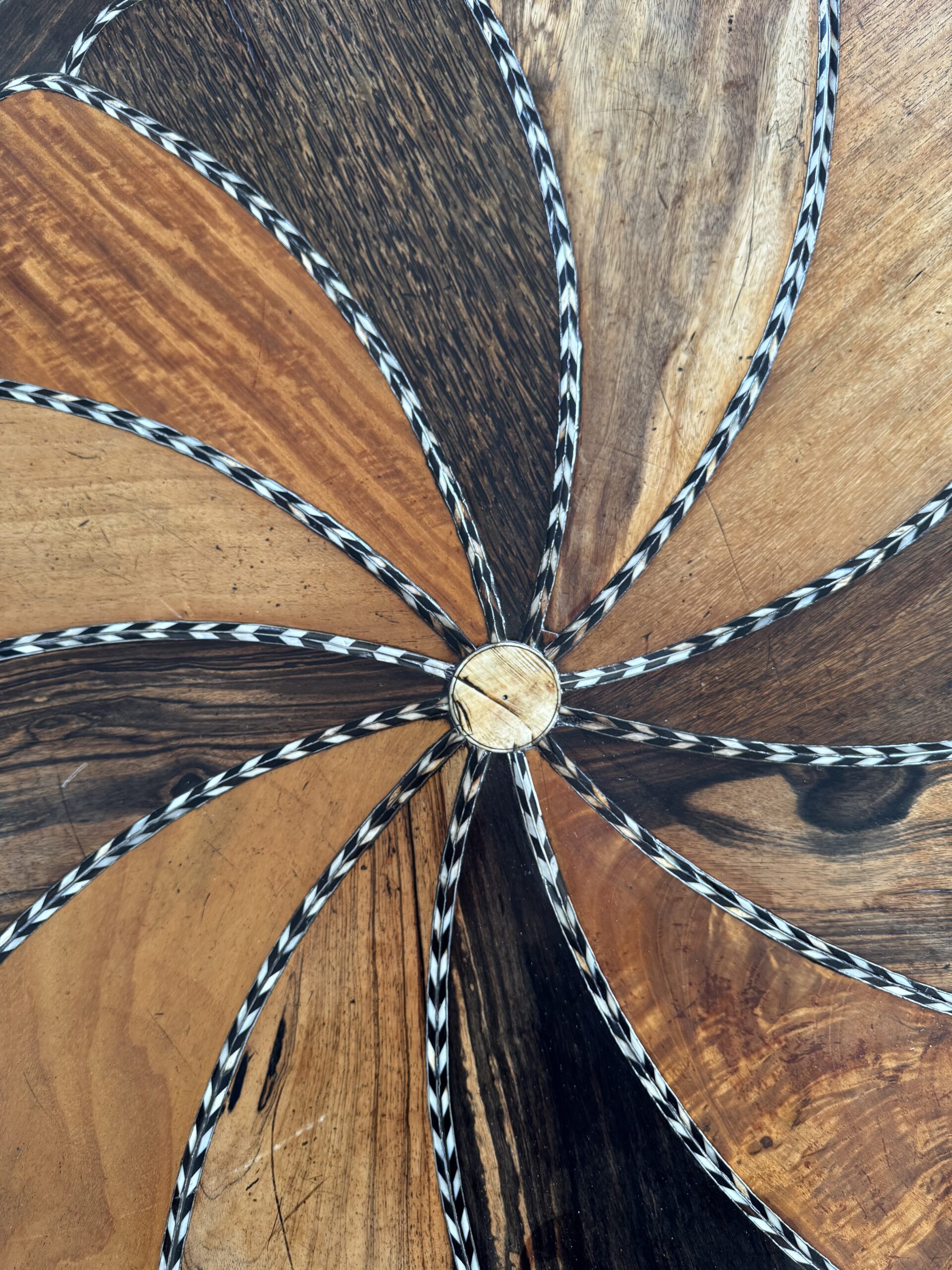
An elegant swirl of specimen woods including coromandel, palm, satinwood, teak and ebony, retaining its bone-inlaid roundel to the centre and geometric chevron banding.
All in superb condition.
These tables are reputed to have been produced in the Galle region of Sri Lanka (formerly Ceylon) by highly-skilled cabinet makers mainly during the first half of the 19th century, to be used chiefly for display purpose in the hallways of a domestic setting. Some occur in large sizes to be used as dining tables by Europeans, and can be very costly, in the £40,000+ range. Smaller versions will have more widespread and practical appeal today.
References:
The Galle District of Ceylon was famous in the 19th Century for its specimen-wood furniture, remarked upon by a traveller in 1848 who described a tea table as a ”fine specimen of the Point-de-Galle inlaid work, on which we are expended the varied beauties of Ceylon’s ninety-nine species of costly wood. The skillful artificers of Galle tempted the traveler with the exquisite productions of their art”. In 1850, H.C. Sirr wrote that in Galle one could find ”those exquisite inlaid articles, which far surpass any specimen of Tunbridge ware that has yet been produced ivory and various coloured native woods are inlaid upon the ebony and as the designs are well defined, the effect produced is magnificent”; A. Jaffer, Furniture from British India and Ceylon, 2001, p. 373, fig. 142 illustrates an ebony circular table with a similar specimen-wood design top. For further comparison see Sotheby’s New York, English Furniture, Ceramics and Decorations, October 20 & 21, 2003, lot 350 ($66,000). A further example sold Sotheby’s, London, November 18, 2009, lot 89 (£30,000) also Sotheby’s, New York, October 22, 2010, lot 155 ($21,250). A workbox from the same Galle district with a similar medallion to the centre of the lid is illustrated ibid, p. 376, fig. 184. For further information about furniture from this region see Regional Furniture, Vol. X, 1996, Robin Jones, ‘Nineteenth Century Carved Ebony Furniture from Sri Lanka: Suggested Methods of Interpretation’, pp. 27-41.
Christies London sold a similar but larger Colonial Ceylonese specimen table for £12,500 on 19 November 2013, lot 484.
The use of specimen woods as a decorative feature was distinctive to Galle District and Ceylonese specimen wood tables first occur in the second quarter of the 19th century. The handling of the inlay on the tops of these tables is incredibly sophisticated, suggesting that by this time the makers were experienced in this type of production. References to the inlaying of specimen woods appear in accounts of the period, H.C. Sirr writes that at Galle there are also manufactured those exquisite inlaid articles…ivory and various coloured native woods are inlaid upon ebony and the designs are well defined (Amin Jaffer’s Furniture from British India and Ceylon, V & A Publications, 2001, p. 373.)
The table tops are generally consistent in decoration and design, with variations in pattern determined by the shape of the top. The hexagonal and rectangular tables usually had scrolled supports and the top typically inlaid with a central radiating roundel within triangular segments and divided by chevron borders.
Ours on offer here is of very useful size and quite sophisticated. Ready to use in any room.