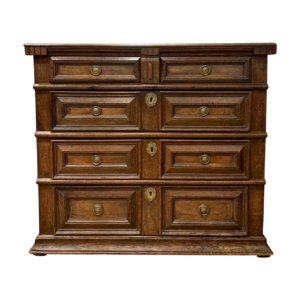

Chests
16th – 19th centuries
At Box House Antiques you can view a large selection of antique chests from the early period of the Age of Oak, up to The Regency. The word 'chest' or 'commode' is said to derive from French meaning 'convenient or suitable'. The English language interprets the word 'commode' as a 'low chest of drawers' or 'toilet'. Related words are 'commodious' & 'accommodation'. The English word 'chest' is also related to the Dutch word 'kist' or 'kas'. The earliest domestic chests were no more than cobbled-together simple wooden storage boxes. 3,000 years ago Egyptian carpenters constructed wooden chests to include exotic ceremonial and burial sarcophagi, and simple wooden boxes to store things. Gradually these boxes evolved into chests as we refer to them today. A selection can found below: In England almost all early examples were constructed of oak, fruitwood, pine, elm, and very occasionally walnut. The major 18th-century cabinet makers took the designs of commodes or chests to enormous heights, far removed from any reference to 'toilet' or simple 'storage'. A visit to Versailles, the Wallace Collection, The Royal Collection, Soane Museum and Waddesdon will leave you in no doubt. The great furniture designers such as Thomas Chippendale, Robert Adam, André-Charles Boulle, Riesener, Carlin, Cressent, Vandercruse and John Cobb were makers and suppliers to the aristocracy and Royalty. Famous documented and rare examples by the above makers can fetch millions. Whilst you would be very fortunate to find stamped or documented chests by any of the above, there remains a large selection of old chest of drawers available in most antique shops and online. The first importation into England of mahogany in the 1720s gave rise to a greatly-expanded production of antique chests, starting out as suitable for a modest bedroom, gradually emerging downstairs into elegant drawing- and reception- rooms, appreciated as works of art in themselves.